For decades, scientists have dreamed of a medicine that could repair the body from within — one capable of regenerating damaged tissue, reversing the effects of disease, and offering hope where conventional treatments fall short. That dream is rapidly becoming reality. Stem cell therapy is at the forefront of a medical revolution, and recent research suggests we are closer than ever to transforming how we treat some of the world’s most devastating conditions.
What Are Stem Cells?
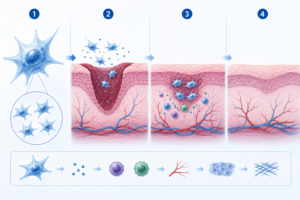
Stem cells are the body’s raw materials — the foundation from which all other specialised cells are built. What makes them remarkable is their dual ability: they can renew themselves indefinitely, and they can transform into many different types of cells, from heart muscle cells to brain neurons to insulin-producing pancreatic cells.
This combination of self-renewal and versatility is what makes stem cells so uniquely powerful as a medical tool.
The Four Main Types of Stem Cells
Not all stem cells are the same. Scientists work with several distinct types, each with its own strengths and applications.
Embryonic Stem Cells (ESCs) are derived from early-stage embryos and are considered the most versatile — capable of becoming virtually any cell type in the human body. While their therapeutic potential is enormous, their use raises ethical questions that have shaped research policy around the world.
Adult Stem Cells (ASCs) are found in specific tissues throughout the body, such as bone marrow, fat, and skin. They are less versatile than embryonic stem cells but are already being used clinically — most notably in bone marrow transplants for blood disorders and leukaemia.
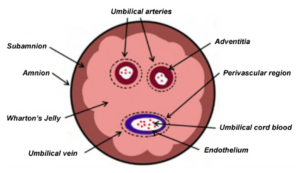
Perinatal Stem Cells are collected from the umbilical cord and placenta after birth. They sit somewhere between embryonic and adult stem cells in terms of capability, and because they are harvested without harming an embryo, they avoid many of the ethical concerns. They are also well-tolerated by the immune system, making them a promising option for donor-based treatments.
Induced Pluripotent Stem Cells (iPSCs) are arguably the most exciting development in the field. Discovered in 2007, iPSCs are ordinary adult cells — such as skin cells — that have been genetically “reprogrammed” to behave like embryonic stem cells. This breakthrough means scientists can create highly versatile stem cells from a patient’s own body, opening the door to personalised treatments without the ethical controversy.
What Conditions Can Stem Cell Therapy Treat?
The range of diseases being targeted by stem cell research is extraordinary. Clinical trials and preclinical studies are now underway for conditions including neurological diseases such as Alzheimer’s and Parkinson’s disease, cardiovascular disease and heart failure, type 1 and type 2 diabetes, leukaemia and other blood cancers, spinal cord injuries, osteoarthritis and bone disorders, autoimmune diseases, and even COVID-19.
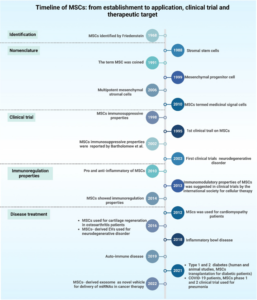
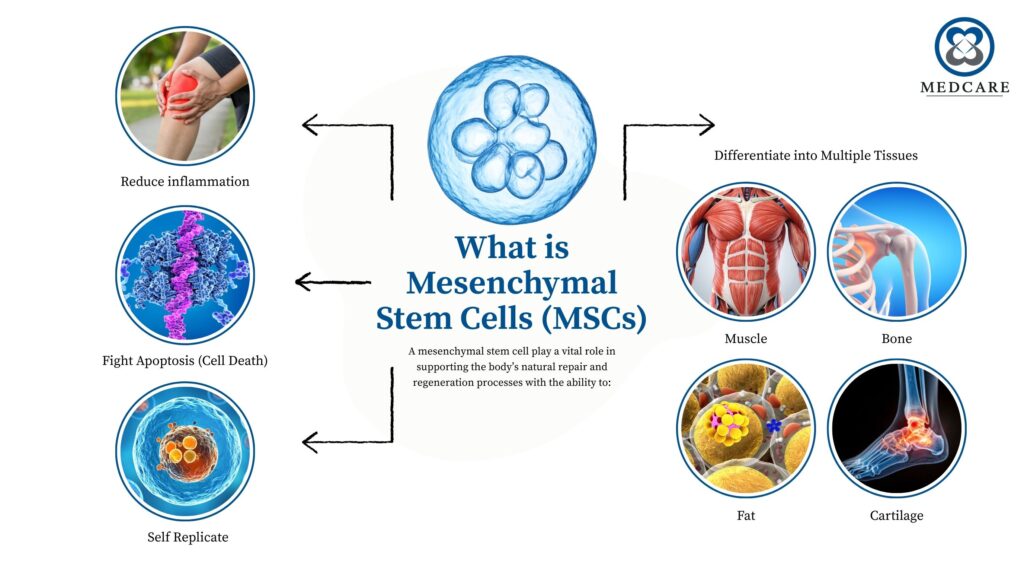
Some of these applications are already delivering real results. Haematopoietic stem cell transplants — better known as bone marrow transplants — have been used for decades to treat leukaemia, often achieving full remission. More recently, clinical trials using mesenchymal stem cells (MSCs) have shown reduced scarring and improved function in heart failure patients, while iPSC-derived pancreatic cells have helped restore insulin production in people with diabetes.
The Technologies Driving the Revolution
Stem cell therapy does not exist in isolation. It is being supercharged by a wave of new biotechnologies that are making treatments more precise, safer, and more effective.
CRISPR-Cas9 gene editing has transformed what is possible in stem cell science. This technology allows scientists to make highly targeted edits to the DNA of stem cells — correcting genetic faults, switching genes on or off, and even rewriting the instructions that cause disease at a cellular level. Newer variations, such as base editing and prime editing, offer even greater precision with fewer unintended side effects.
Single-cell RNA sequencing allows researchers to analyse individual stem cells in extraordinary detail, revealing how they behave, how they respond to treatment, and how disease affects them at a molecular level. This deeper understanding is helping scientists design more effective therapies.
Exosome-based therapeutics represent a newer frontier. Stem cells naturally release tiny vesicles called exosomes, which carry proteins, RNA, and signalling molecules to other cells. Researchers are now harnessing these exosomes as a delivery mechanism for therapy — potentially offering many of the benefits of stem cell treatment in a minimally invasive, cell-free form.
Stem Cells and Personalised Medicine
One of the most exciting prospects in this field is the convergence of stem cell therapy with personalised medicine — the idea that treatments should be tailored specifically to the individual patient.
iPSCs make this vision possible. Because they can be derived directly from a patient’s own cells, they carry that person’s unique genetic profile. This means scientists can create disease models that accurately reflect an individual’s biology, test how they might respond to different drugs, and develop cell-based treatments designed specifically for them — reducing the risk of rejection and improving outcomes.
Combined with advances in genomics and gene editing, personalised stem cell therapies could one day replace the one-size-fits-all approach to treating complex, chronic diseases.
What Are the Challenges?
Stem cell therapy is not without its obstacles, and responsible reporting demands we acknowledge them clearly.
One of the most significant concerns is the risk of tumour formation. In some cases, transplanted stem cells may multiply in an uncontrolled way, potentially leading to cancer. Rigorous safety testing before any clinical use is essential. Immune rejection is another challenge — even with the best matching, the body can sometimes recognise transplanted cells as foreign and attack them. Researchers are developing smarter immunomodulation strategies to address this.
There are also practical barriers: producing stem cells at the scale and quality required for widespread clinical use is expensive and technically demanding. And while the number of clinical trials is growing rapidly, many therapies are still in early phases, meaning long-term safety and efficacy data is still being gathered.
Ethical considerations — particularly around embryonic stem cell use — continue to shape the regulatory landscape, with policies varying significantly between countries.
The Future of Stem Cell Therapy
The direction of travel is clear. Stem cell therapy is moving steadily from experimental science towards mainstream medicine, and the pace of progress is accelerating. Researchers are focused on refining immune modulation to prevent rejection, advancing gene-editing technologies for greater precision, developing bioengineered tissues and organs by combining stem cells with advanced biomaterials, and integrating stem cell approaches with precision medicine to deliver treatments tailored to the individual.
The coming decade is likely to bring stem cell therapies into routine clinical use for conditions where they are currently only available in trials. For patients with neurodegenerative diseases, heart conditions, diabetes, and beyond, this could mean treatments that don’t just manage symptoms — but genuinely repair and regenerate.
Final Thoughts
Stem cell therapy stands at a remarkable inflection point. The science has moved from foundational discovery to real clinical application within the span of a few decades — a testament to the extraordinary speed of modern biomedical research. While challenges remain, the trajectory is unmistakably positive.
For anyone living with a chronic or degenerative condition, or simply interested in the future of medicine, stem cell therapy is one of the most important stories in healthcare today.